Challenge
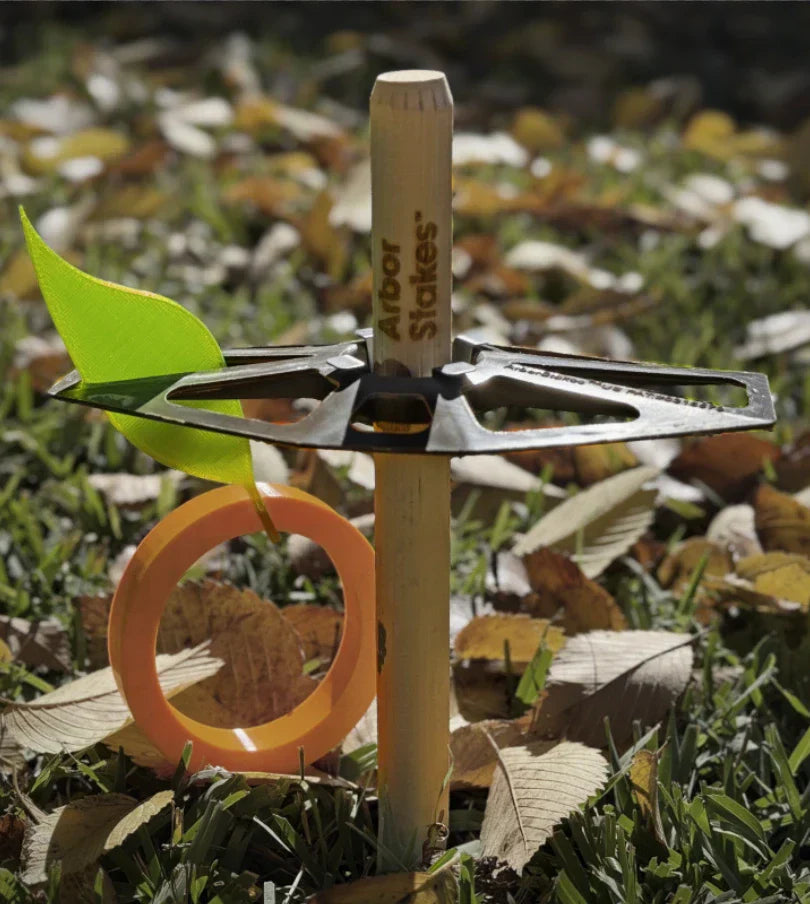
Conventional tree stakes are typically installed above ground, presenting both safety hazards and aesthetic concerns, while also proving challenging in providing adequate support. Recognizing these issues, Landscape Architect Kris Brown developed an improved method for supporting trees and sought a sustainable material to complement his innovation. Through research, he identified PHA as a suitable option and subsequently contacted Mango Materials to collaborate on a solution.

Approach
YOPP PHA pellets are highly suitable due to their soil biodegradability. When a tree stake made from YOPP is buried, soil microorganisms gradually biodegrade the material. This process supports tree root development and stability without necessitating future retrieval of the stake. Additionally, PHA degradation does not produce microplastics, and the inclusion of specific additives can provide nutrients that improve soil quality. These attributes benefit trees, the environment, and individuals who utilize surrounding green spaces.

Material selection rationale
These tree stakes are produced through injection molding utilizing the YOPP high toughness (HT) ductile grade. The material’s enhanced ductility permits the stake to be securely driven into the soil without risk of fracturing or brittleness.
Outcome
So far, ArborStakes have been used to plant thousands of trees across the United States. Customers who use ArborStakes say they're simple to set up and help reduce costs since there's no need to pay for retrieval labor.
The utilization of YOPP for environmental purposes, such as tree stakes, offers benefits not only to the trees themselves but also to the broader environment. By substituting conventional fossil-based plastics with more sustainable alternatives, this approach can contribute to cost reduction and enhance safety in living, working, and recreational spaces.
“I did a lot of research and was drawn to PHA due to its soil biodegradability, which is a must for my product!” – Kris Brown, ArborStakes